When should I actually start the approvals process?
Usually people ask because they are unsure what to do. They are still thinking things through. They don’t want to spend money too early. They are worried about jumping into something they are not ready to deal with yet.
That hesitation is normal.
Approvals sound complicated. They feel heavy. And many people assume approvals come after design.
That assumption is where most projects get into trouble.
Approvals are not a last step
A lot of people think approvals happen once the design is finished.
In reality, approvals shape the design from the very beginning.
Zoning, permitted uses, setbacks, conservation authority requirements, fire access, accessibility, and servicing all affect what can actually be built. If these things are not looked at early, design work often has to be revised or redone.
That is where delays and extra costs show up.
If you are still feeling overwhelmed by the approvals process itself, I walk through why you do not have to navigate it alone in Week 1 of this series. That post focuses on what approvals really involve and why having the right guide matters early.
What starting approvals early actually means
Starting early does not mean final drawings and concrete decisions.
It does not mean hiring a full consultant team.
It does not mean committing to construction.
Early approvals work usually looks like this:
reviewing zoning and permitted uses
identifying site constraints
understanding which approvals apply to your project
confirming whether a minor variance or rezoning may be needed
This stage is about understanding what is possible. Not producing paperwork.
A pattern I see all the time
Someone comes to me with a solid idea. They have thought it through. They are excited. They are ready to move forward.
Then they say, “We just want to check zoning quickly before we go too far.”
That zoning check often brings up things they were not expecting. Maybe the use is not permitted. Maybe conservation authority approval is required. Maybe access or servicing is an issue.
Nothing is wrong. The idea is not bad.
But now the timeline changes.
When these conversations happen early, they feel manageable. When they happen later, they feel stressful.
So when should you start the approvals process
You should start once your idea feels real enough that you want to know if it is actually viable.
That might be when you are thinking about buying a property. It might be when you want to change the use of an existing building. It might be when you feel stuck and are not sure what the next step is.
You do not need all the answers.
You need clarity.
Why starting early saves time and money
Starting approvals early helps you avoid designing something that cannot be approved.
It helps you understand which consultants you actually need and when.
It helps you set realistic timelines and budgets.
Most importantly, it helps you make decisions based on information instead of assumptions.
The role of the right professional at this stage
At the early stage, you do not need someone to push you faster.
You need someone who understands zoning, building code, and approvals well enough to explain what matters now and what can wait.
You need someone who can translate regulations into clear options so you can make informed decisions.
That early guidance is what keeps projects moving forward instead of getting stuck.
What I hear after early approvals conversations
After an early review, people often say the same thing.
I feel better. I know what I am dealing with now.
That is the goal.
Approvals are not there to stop good projects. They exist to guide how projects move forward.
When they are addressed early, they become part of the process instead of an obstacle.
If you are unsure about your next step
If you are wondering whether it is too early to start the approvals process, it usually means it is the right time to talk.
A short conversation can clarify what needs attention now, what can wait, and what your options are.
You Have a Vision — But the System Feels Overwhelming
You feel lost in the maze of zoning, approvals, and requirements. The thought of having to figure out who you’re supposed to talk to is overwhelming. Add in the fear that someone might tell you your idea can’t be done, or that you’ll miss something and get shut down halfway through because you didn’t know what you didn’t know, and it’s easy to feel like leaving your vision as a dream instead of bringing it to life.
A Real Example: How One Bakery Turned Uncertainty Into Momentum
A while back I was visiting my favourite local bakery and chatting with the owner when they shared that they were facing a familiar challenge. They needed to expand. Their building was being sold, and this was their moment to make a big move, but their expertise is in pastries, not construction.
A rundown property came up for sale. It might work, but they couldn’t see the full potential. Contractor friends told them they’d need an architect and a few engineers to pull off the transformation. Costs seemed to be climbing before they even began.
I listened to their plans and their concerns. I asked a few leading questions, then offered my support. “You can do that?” Absolutely. I’m a Licensed Technologist through the OAA.
A year and a half later, through shutdowns, supply shortages, and all the unpredictability that comes with construction, they opened a beautiful new bakery with a full kitchen, seating area, and a residence above. Their dream space (for now). Today, five years later, they’re a thriving staple in our community.
The Hidden Complexity of Turning a Vision Into Reality
When you’re dreaming, it all feels simple. But the moment you start moving toward reality, the layers appear:
approvals from multiple agencies
coordinating consultants
understanding the Ontario Building Code
navigating zoning bylaws
figuring out who you’re supposed to talk to — and in what order
Your project might be too complex for a BCIN designer, but you don’t want to get lost inside a large architectural firm. You care deeply about community impact and ethical alignment. And you want someone who sees the big picture, not just the drawings.
This is exactly why the Licensed Technologist OAA designation exists.
What Exactly Is a Licensed Technologist OAA?
Great question — and one I get often.
In short, we’re the “middle” designers. Our scope includes everything from single-family homes to offices, restaurants, and small commercial buildings up to 100 people. Want to build a four-storey multi-residential project? We can do that too. In most smaller towns, almost every building that isn’t a church, hall, or community centre falls within the LTOAA scope.
But what does that actually mean for you? Here are five key areas where a Licensed Technologist OAA supports your project in ways most people don’t realize:
5 Key Responsibilities You Might Not Realize LTOAAs Handle
1. Leading Your Entire Approvals & Permit Strategy
We go through similar training as Architects. Our strength is mapping out the entire project from ideation to completion. We identify approvals pathways, uncover challenges before they become delays, and propose solutions that protect your timeline and your goals.
2. Coordinating Consultants So Everyone Works Together
The dreaded “C-word”! No one gets excited about bringing in yet another consultant. As your lead designer, we coordinate structural, civil, mechanical, environmental, survey, fire, and more — making sure everyone stays aligned with your vision. Having one person who knows your goals directing the team saves both time and fees.
3. Interpreting & Applying the Ontario Building Code
Ah, the Ontario Building Code. The ever-expanding collection of clauses, exceptions, and “you didn’t know you needed this” requirements.
Part of our role is understanding the nuanced details that affect your build, and spotting compliance issues early. Instead of fearing permit reviews, you get peace of mind knowing that if anything comes up, your designer has your back.
4. Signing & Sealing Architectural Documents
Here’s something most people don’t realize: Not everyone who draws plans can legally take responsibility for them.
As a Licensed Technologist OAA, I can sign and seal architectural drawings within my scope. That stamp isn’t just a formality — it means:
your plans are credible and compliant
the permit office recognizes them
lenders and partners see the project as legitimate
you’re protected under professional standards
It’s the difference between a beautiful idea… and an approved set of drawings you can actually build from.
5. Protecting Public Interest (and Why It Matters)
One of the most surprising parts of our role is that we’re legally required to protect public interest ,not just follow client wishes.
That means looking out for safety, accessibility, environmental impact, and community fit. It’s part ethics, part regulation, and part common-sense responsibility to the places we build in.
Your Low-Stress Path Forward: What to Do Instead
Talk to a licensed professional early — before design or funding
Map out your approvals roadmap — avoid blind spots
Get coordinated drawings — your consultants need a conductor
Confirm what can legally be sealed
Align design decisions with public interest + regenerative goals
Why This Matters for Regenerative Development
When you’re building something meant to last the process matters just as much as the final design. It is that support that honours the land and supports a community.
I learned this firsthand at Homegrown Hideaway. Every approval we secured early, every detail we sorted out ahead of time, saved us from waste, rework, and emotional exhaustion later.
A thoughtful approvals strategy doesn’t just get you a permit. It protects natural systems. It reduces unnecessary disturbance. It helps you design with the land rather than against it.
And when everyone on the project is coordinated, you’re not burning time, money, and materials fixing what didn’t align in the first place.
At its heart, regenerative development is long-term thinking. Its a slower, steadier approach that supports people, place, and possibility. Compliance isn’t a barrier. It’s one of the tools that helps you build responsibly and beautifully.
A Gentle Call to Action
If all of this feels heavy or confusing, please know you’re not alone. Every visionary entrepreneur hits this moment, when the excitement meets the reality of approvals, regulations, and “I didn’t know I needed that.”
Your vision deserves more than guesswork. It deserves a clear, confident path forward.
This is the work I do every day: helping founders and landowners navigate approvals, compliance, and regenerative development so their projects can take root without unnecessary stress.
Do I need an Architect or Licensed Technologist OAA?
A Licensed Technologist OAA (LTOAA) can legally design, sign, and seal a wide range of buildings in Ontario, including:
single-family homes
small commercial spaces (retail, offices, cafés, restaurants)
mixed-use buildings
multi-residential buildings up to four storeys
most rural or small-town buildings under 100-person occupancy
If your project falls within those categories, you do not need a full Architect. A Licensed Technologist OAA can handle the entire design, approvals, and coordination process for you.
You do need an Architect if your project exceeds the LTOAA scope — for example:
large assembly buildings
complex institutional buildings
high-rise or high-hazard structures
major public facilities requiring specialized oversight
But here’s the part most people don’t know: The vast majority of early-stage tourism, hospitality, community, and small commercial developments fall directly into the LTOAA scope.
So in many cases, working with a Licensed Technologist OAA is the perfect fit — you get the right level of expertise and leadership without the high cost or scale of a large architectural firm.
How early should I start the approvals process?
Sooner than most people think — ideally before any design work begins.
Here’s why:
Approvals impact what you can build
Zoning tells you where you can build it
Agencies like Conservation Authorities, Public Health, and Fire Services may have requirements that affect your layout and budget
Early clarity prevents redesigns (and surprise fees) later
Many projects stall because they started drawing before understanding the rules
A good rule of thumb: As soon as you know what you want to build, start talking to someone who understands approvals.
In my work, this looks like:
A short conversation to clarify your vision
An approvals scan to identify all agencies involved
A roadmap that lays out the order, timelines, and potential constraints
Only then do we start designing
When you front-load the approvals strategy, the whole project moves smoother, faster, and with far fewer stress points.
What drawings need to be sealed for permits?
Only certain drawings need a professional seal.
In Ontario, for buildings within LTOAA scope, the following often need to be sealed:
Architectural Drawings
site plan
floor plans
elevations
building sections
details and schedules
Sometimes Required (Depending on the Project)
These may need stamps from other professionals:
structural drawings (Professional Engineer)
mechanical and electrical drawings (depending on complexity)
grading plans (Civil Engineer)
septic/system design (where applicable)
Why Seals Matter
A seal confirms:
the drawings meet provincial and municipal requirements
a regulated professional is taking responsibility
the plans are complete, coordinated, and ready for review
Not everyone who “draws plans” can legally seal them — and this is where many projects get stuck unexpectedly.
When I act as the lead Licensed Technologist OAA on a project, I make sure:
all architectural drawings I prepare are sealed
all required consultants provide their own seals
everything is coordinated before submission
That way, when the permit office opens your package, it’s clear, complete, and ready to move forward.
You Have a Vision — But the System Feels Overwhelming
You feel lost in the maze of zoning, approvals, and requirements. The thought of having to figure out who you’re supposed to talk to is overwhelming. Add in the fear that someone might tell you your idea can’t be done, or that you’ll miss something and get shut down halfway through because you didn’t know what you didn’t know, and it’s easy to feel like leaving your vision as a dream instead of bringing it to life.
A Real Example: How One Bakery Turned Uncertainty Into Momentum
A while back I was visiting my favourite local bakery and chatting with the owner when they shared that they were facing a familiar challenge. They needed to expand. Their building was being sold, and this was their moment to make a big move, but their expertise is in pastries, not construction.
A rundown property came up for sale. It might work, but they couldn’t see the full potential. Contractor friends told them they’d need an architect and a few engineers to pull off the transformation. Costs seemed to be climbing before they even began.
I listened to their plans and their concerns. I asked a few leading questions, then offered my support. “You can do that?” Absolutely. I’m a Licensed Technologist through the OAA.
A year and a half later, through shutdowns, supply shortages, and all the unpredictability that comes with construction, they opened a beautiful new bakery with a full kitchen, seating area, and a residence above. Their dream space (for now). Today, five years later, they’re a thriving staple in our community.
The Hidden Complexity of Turning a Vision Into Reality
When you’re dreaming, it all feels simple. But the moment you start moving toward reality, the layers appear:
approvals from multiple agencies
coordinating consultants
understanding the Ontario Building Code
navigating zoning bylaws
figuring out who you’re supposed to talk to — and in what order
Your project might be too complex for a BCIN designer, but you don’t want to get lost inside a large architectural firm. You care deeply about community impact and ethical alignment. And you want someone who sees the big picture, not just the drawings.
This is exactly why the Licensed Technologist OAA designation exists.
What Exactly Is a Licensed Technologist OAA?
Great question — and one I get often.
In short, we’re the “middle” designers. Our scope includes everything from single-family homes to offices, restaurants, and small commercial buildings up to 100 people. Want to build a four-storey multi-residential project? We can do that too. In most smaller towns, almost every building that isn’t a church, hall, or community centre falls within the LTOAA scope.
But what does that actually mean for you? Here are five key areas where a Licensed Technologist OAA supports your project in ways most people don’t realize:
5 Key Responsibilities You Might Not Realize LTOAAs Handle
1. Leading Your Entire Approvals & Permit Strategy
We go through similar training as Architects. Our strength is mapping out the entire project from ideation to completion. We identify approvals pathways, uncover challenges before they become delays, and propose solutions that protect your timeline and your goals.
2. Coordinating Consultants So Everyone Works Together
The dreaded “C-word”! No one gets excited about bringing in yet another consultant. As your lead designer, we coordinate structural, civil, mechanical, environmental, survey, fire, and more — making sure everyone stays aligned with your vision. Having one person who knows your goals directing the team saves both time and fees.
3. Interpreting & Applying the Ontario Building Code
Ah, the Ontario Building Code. The ever-expanding collection of clauses, exceptions, and “you didn’t know you needed this” requirements.
Part of our role is understanding the nuanced details that affect your build, and spotting compliance issues early. Instead of fearing permit reviews, you get peace of mind knowing that if anything comes up, your designer has your back.
4. Signing & Sealing Architectural Documents
Here’s something most people don’t realize: Not everyone who draws plans can legally take responsibility for them.
As a Licensed Technologist OAA, I can sign and seal architectural drawings within my scope. That stamp isn’t just a formality — it means:
your plans are credible and compliant
the permit office recognizes them
lenders and partners see the project as legitimate
you’re protected under professional standards
It’s the difference between a beautiful idea… and an approved set of drawings you can actually build from.
5. Protecting Public Interest (and Why It Matters)
One of the most surprising parts of our role is that we’re legally required to protect public interest ,not just follow client wishes.
That means looking out for safety, accessibility, environmental impact, and community fit. It’s part ethics, part regulation, and part common-sense responsibility to the places we build in.
Your Low-Stress Path Forward: What to Do Instead
Talk to a licensed professional early — before design or funding
Map out your approvals roadmap — avoid blind spots
Get coordinated drawings — your consultants need a conductor
Confirm what can legally be sealed
Align design decisions with public interest + regenerative goals
Why This Matters for Regenerative Development
When you’re building something meant to last the process matters just as much as the final design. It is that support that honours the land and supports a community.
I learned this firsthand at Homegrown Hideaway. Every approval we secured early, every detail we sorted out ahead of time, saved us from waste, rework, and emotional exhaustion later.
A thoughtful approvals strategy doesn’t just get you a permit. It protects natural systems. It reduces unnecessary disturbance. It helps you design with the land rather than against it.
And when everyone on the project is coordinated, you’re not burning time, money, and materials fixing what didn’t align in the first place.
At its heart, regenerative development is long-term thinking. Its a slower, steadier approach that supports people, place, and possibility. Compliance isn’t a barrier. It’s one of the tools that helps you build responsibly and beautifully.
A Gentle Call to Action
If all of this feels heavy or confusing, please know you’re not alone. Every visionary entrepreneur hits this moment, when the excitement meets the reality of approvals, regulations, and “I didn’t know I needed that.”
Your vision deserves more than guesswork. It deserves a clear, confident path forward.
This is the work I do every day: helping founders and landowners navigate approvals, compliance, and regenerative development so their projects can take root without unnecessary stress.
If you’d like to talk through your idea, I’m here. Sometimes a simple 20-minute conversation saves months of uncertainty.
Do I need an Architect or Licensed Technologist OAA?
A Licensed Technologist OAA (LTOAA) can legally design, sign, and seal a wide range of buildings in Ontario, including:
single-family homes
small commercial spaces (retail, offices, cafés, restaurants)
mixed-use buildings
multi-residential buildings up to four storeys
most rural or small-town buildings under 100-person occupancy
If your project falls within those categories, you do not need a full Architect. A Licensed Technologist OAA can handle the entire design, approvals, and coordination process for you.
You do need an Architect if your project exceeds the LTOAA scope — for example:
large assembly buildings
complex institutional buildings
high-rise or high-hazard structures
major public facilities requiring specialized oversight
But here’s the part most people don’t know: The vast majority of early-stage tourism, hospitality, community, and small commercial developments fall directly into the LTOAA scope.
So in many cases, working with a Licensed Technologist OAA is the perfect fit — you get the right level of expertise and leadership without the high cost or scale of a large architectural firm.
How early should I start the approvals process?
Sooner than most people think — ideally before any design work begins.
Here’s why:
Approvals impact what you can build
Zoning tells you where you can build it
Agencies like Conservation Authorities, Public Health, and Fire Services may have requirements that affect your layout and budget
Early clarity prevents redesigns (and surprise fees) later
Many projects stall because they started drawing before understanding the rules
A good rule of thumb: As soon as you know what you want to build, start talking to someone who understands approvals.
In my work, this looks like:
A short conversation to clarify your vision
An approvals scan to identify all agencies involved
A roadmap that lays out the order, timelines, and potential constraints
Only then do we start designing
When you front-load the approvals strategy, the whole project moves smoother, faster, and with far fewer stress points.
What drawings need to be sealed for permits?
Only certain drawings need a professional seal.
In Ontario, for buildings within LTOAA scope, the following often need to be sealed:
Architectural Drawings
site plan
floor plans
elevations
building sections
details and schedules
Sometimes Required (Depending on the Project)
These may need stamps from other professionals:
structural drawings (Professional Engineer)
mechanical and electrical drawings (depending on complexity)
grading plans (Civil Engineer)
septic/system design (where applicable)
Why Seals Matter
A seal confirms:
the drawings meet provincial and municipal requirements
a regulated professional is taking responsibility
the plans are complete, coordinated, and ready for review
Not everyone who “draws plans” can legally seal them — and this is where many projects get stuck unexpectedly.
When I act as the lead Licensed Technologist OAA on a project, I make sure:
all architectural drawings I prepare are sealed
all required consultants provide their own seals
everything is coordinated before submission
That way, when the permit office opens your package, it’s clear, complete, and ready to move forward.
Have you started a project, full of dreams and Pinterest idea boards? You are full of ideas and passion… then it hits. Reality sets in and you are faced with zoning, bylaws, site conditions and permit applications. Suddenly that dream project has turned into a confusing maze, not so simple anymore.
That’s where I come in.
Who I am
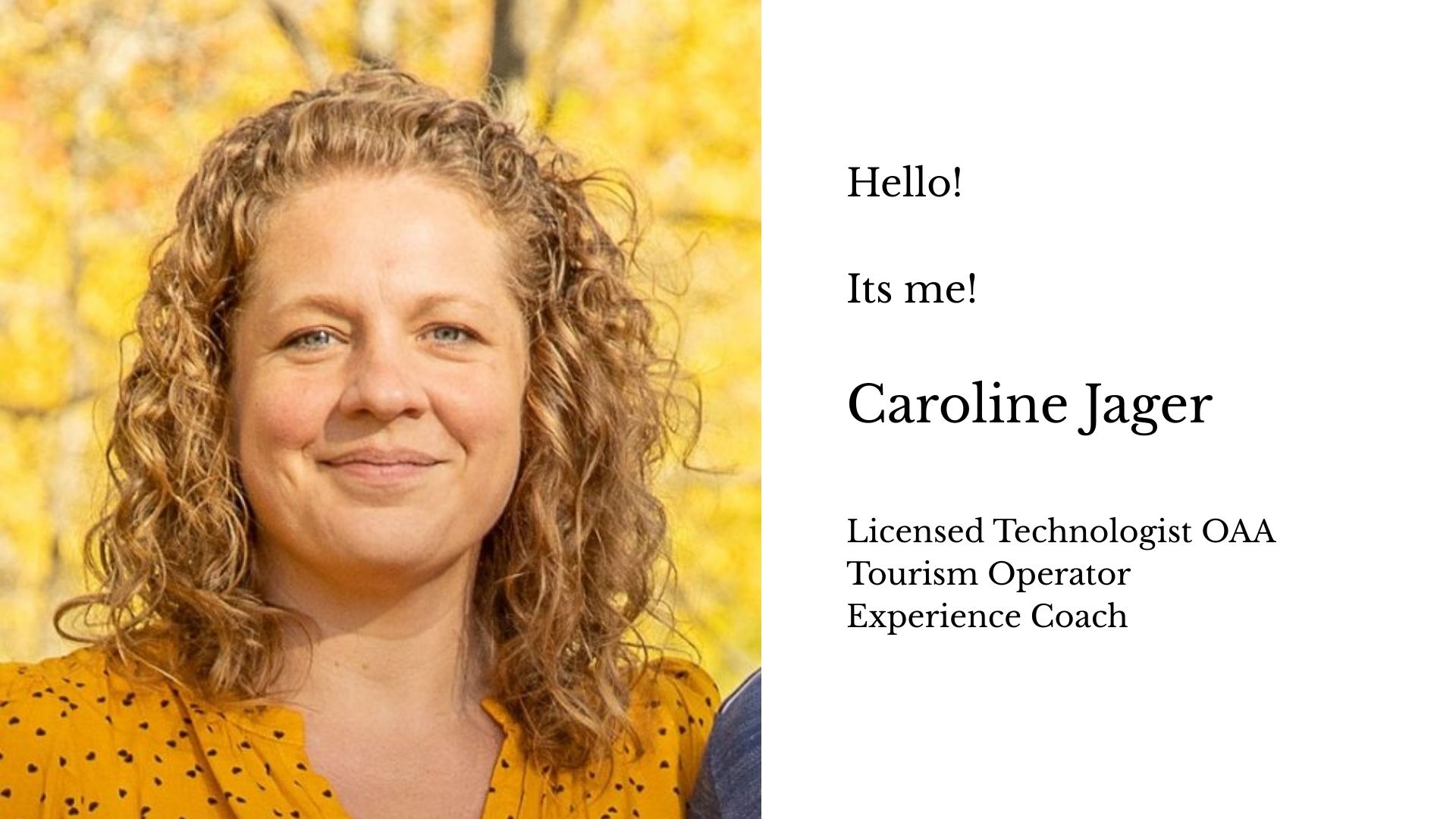
I’m Caroline Jager, a Licensed Technologist OAA with more than 20 years of experience in architecture, project management, and tourism design. Over the years I have worked with clients who face the same challenge. They have a strong vision for their project, but are overwhelmed with the approvals process and technical details.
My role is to bridge the gap between big-picture dreams and practical solutions — helping you move forward with confidence, clarity, and compliance.
Why I do this work
After spending years in architectural design and municipal planning, I had a dream of my own. I wanted to have it all (sound familiar?)While creating my dream Homegrown Hideaway, even with my experience and network of colleagues, it was still frustrating.
I noticed a pattern. If I was finding this a challenge, how do people who are not in the industry navigate it? People with incredible ideas – homeowners, developers, tourism operators – often struggle to get past the red tape.
The frustration isn’t from a lack of passion or effort. It is simply that the process is complex. Every project touches multiple layers: zoning, site planning, building code, environmental considerations, and community impact.
I believe the approvals process doesn’t have to be a barrier. With the right guidance, it can be an opportunity to create spaces that not only work — but also give back to the people and communities they serve.
What I do
Mixed-Use & Commercial Projects
Mixed-use developments are more than just buildings — they’re catalysts for thriving communities. With experience in municipal approvals and design strategy, I help businesses and developers unlock the potential of their sites while balancing practicality and vision.
Tourism & Experiential Projects
Tourism businesses face a unique challenge: creating meaningful experiences while meeting regulatory requirements. I work with operators to navigate the approvals process and bring regenerative tourism projects to life — ones that support both the land and the people who experience it.
Custom Residential
Your home should reflect your life — not just on the inside, but in the way it fits into your property, neighbourhood, and long-term goals. From new builds to additions, I help homeowners design spaces that are functional, compliant, and sustainable.
My Regenerative Approach
For me, design isn’t just about meeting today’s needs. It’s about creating projects that give back more than they take.
That means:
Designing with sustainability in mind
Supporting the character and needs of local communities
Planning with longevity so projects thrive for generations
Whether it’s a family home, a mixed-use development, or a tourism venture, my focus is always the same: grow with purpose, not just profit.
What to Expect Here
This blog is where I’ll share insights, practical advice, and stories from the field — from breaking down the approvals process to exploring regenerative design strategies. My goal is to make this space a resource for anyone dreaming of their next project but unsure where to start.
If you’re in the early planning stages, stuck in the permitting process, or simply curious about regenerative design, I invite you to follow along.
Lets Connect
If you’re planning a project and feeling overwhelmed by zoning, permits, or compliance, you don’t have to do it alone.
Reach out to me here to start a conversation about how we can bring your vision to life.
Together, we can turn your project into something that not only works — but leaves a lasting, positive impact.